CARE PARTNERS

When providing care when someone is ill can be overwhelming. This is a presentation on three such roles: caregivers, caretakers, or care partners. These are strictly my definitions based on my own experience as a nurse, mother, wife, and patient.

To me, a caregiver is someone who gives care based on what he or she thinks the person needs or wants. This is a common definition and is often performed by nurses and medical staff personnel. Outside the medical community, the caregiver provides basic help in the home and tends to the personal needs of the patient (bathing, walking, exercising, cooking, etc.).

One who is a caretaker (not at the cemetery), provides care based strictly on what he or she thinks the patient wants or needs. Time for a bath, go for a walk, you must eat this, take these pills, and so forth.

At the beginning of my cancer journey, Jim was a caretaker. Based on my personality, I wanted a caregiver. We talked and he understood and became the best caregiver any person could want or need.

November 2008

Over the past 14 years, he has moved into the role of a care partner. Such people give care based on what the patient says or needs, and what is most helpful and safe. They listen to the patient. They share their thoughts about what is needed and wanted, coming to a decision that is best for the loved one. They are truly partners.

The important lesson to be learned when a loved one needs care is to provide safety and loving care. It is vitally important to encourage their independence…do not enable them. The goal should always be encouraging healthy choices, independence, and full recovery.

Learn more in my book, Outshine, An Ovarian Cancer Memoir. All proceeds go to gynecologic cancer research.
FACEBOOK: WHY I LEFT IT.

I have deleted my account on Facebook for a variety of reasons. It was not an easy decision, but one I do not regret. Here is a little history:

  • Facebook was launched on October 28, 2003, under the name Facemash.
  • Then it was relaunched as The Facebook on February 4, 2004.
  • It was founded by Mark Zuckerman and his friends at Harvard University.
  • Initially intended for only Harvard students.
  • In September 2006, it was open to everyone with an email and to those at least 13 years old.
  • The original purpose was to help college students connect with one another.
  • Today it has 2.5 billion users.

The disadvantages or cons of FB:

  • Some people are addicted to it.
  • Others are on FB during their work schedules.
  • An easy target for viruses
  • High incidence of identity theft
  • It can lead to antisocial behavior
  • Can put a strain on a relationship

The number of scams, bullying, stalking, and harassment is frightening. Once a photo, statement, or threat is posted, it is there forever. Too often, the lives of young people have been damaged or driven to suicide.

My small voice will not change the FB mania and its control worldwide. I may well lose contact with potential followers of this blog, readers of my books, or happenings with family and friends.

I plan to stay in touch with family and friends through emails, this blog, and phone calls. Safer, friendlier, and no risk of identity theft.

STORMS OF LIFE

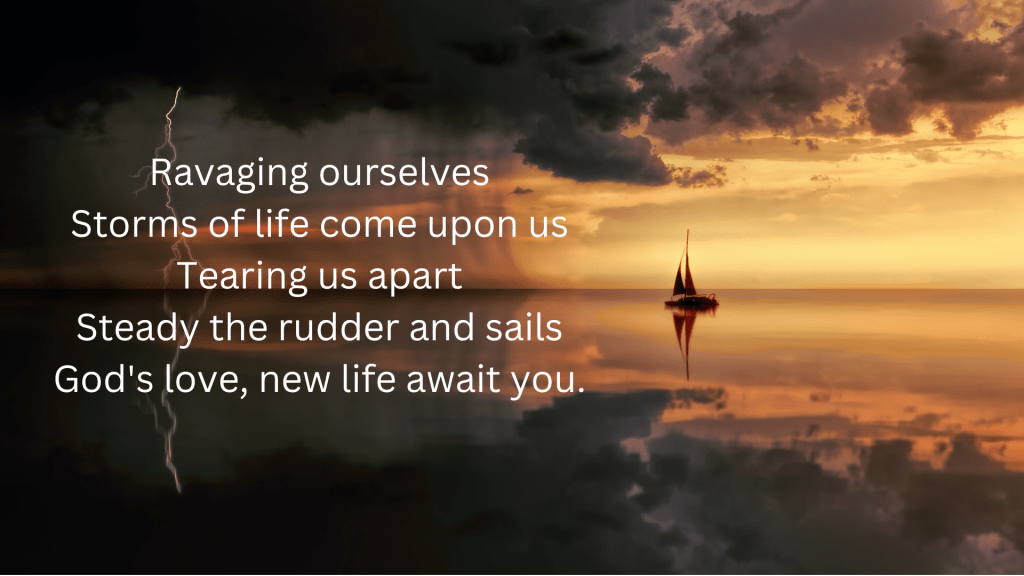
The storms of life can occur in many forms: an unexpected death, a life-threatening diagnosis, or a natural disaster. When any of these events occur, we are often like a ship in a storm with our sails and rudder unused.

We struggle with such questions as:

  • Why me?
  • How will I get through this?
  • Can anyone help me?
  • Where is God?

Our son-in-law died unexpectedly at the young age of 59. Though he was the specimen of perfect health, he was unaware his heart was dangerously in need of surgery.

The storm of cancer has been in my life for 14 years, ebbing and flowing with intensity. My lessons are the same: taking good care of my body and living in the moment with love.

These events and the devastating hurricane Ian did prompt me to look at my life. How have I reached out to others? Have I been judgmental? Have I been prejudicial? Have I lived in the moment with love?

Lessons:

  1. Gratitude…shows us that real joy can come in the midst of the hardest time.
  2. Family & friends…storms bring. people closer together
  3. Change behaviors…be more patient, understanding, humble, loving, etc.
  4. Storms show us who we are and about those around us.
  5. New strengths can be developed
  6. Storms remind us of what is truly important.

As we face various storms, we may well need to adjust the sails and steady the rudder. We can be better, stronger, and more loving.

LAST ACTS OF KINDNESS

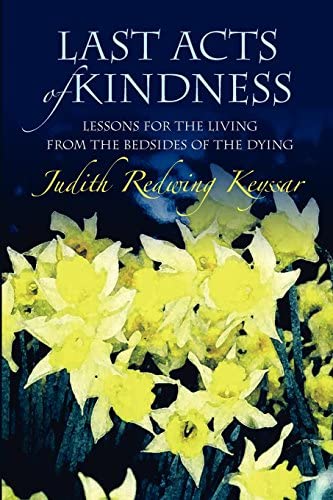
In her award-winning book, Last Acts of Kindness, Judith Redwing Keyssar, writes about her experience in the field of palliative care providing emotional and spiritual guidance and support. She describes how she helped people in their dying processes.

From the preface: I have watchedpeople change drastically and open to life in new and unexpected ways, after being at the bedside of a loved one. The simplest and most profound lesson that I have learned ver and over again is that love is truly all that matters, and in the end, a force much greater than our small human lives connects us all.

 Ms. Keyssar is an author, Palliative Care Clinician, poet, and educator. She is an advocate for the understanding and acceptance of palliative care and care for the dying.
She leads three poetic medicine workshops each week. These workshops are all virtual and are being attended by people all over the world. No writing experience is required.

Here are the links to the three workshops:

Food for Thought Poetry for Resilency https://meripoetrycafe.eventbrite.com

Loss, Losing, and Loosening poetry for grief and loss. https://griefhealingpoetry.eventbrite.com

Wounded Healer https://woundedhealer.eventbrite.com 

I am honored to call Ms. Keyssar a friend. We first “met” through the Internet since we are both ovarian cancer survivors, authors, and public speakers. When she came to the Orlando area to receive an award, we had a wonderful in-person time together.

It is my great pleasure to feature her on this blog. Her website is https://redwingkeyssar.com/ She welcomes your comments or questions. She can also be reached at UCSF Meri Center for Education in Palliative Care at Mt. Zion. https://meri.ucsf.edu/content/contact-us or 415-509-8645

Just as a side note: I have closed my FB and Smashwords accounts.

AFTER HURRICANE IAN

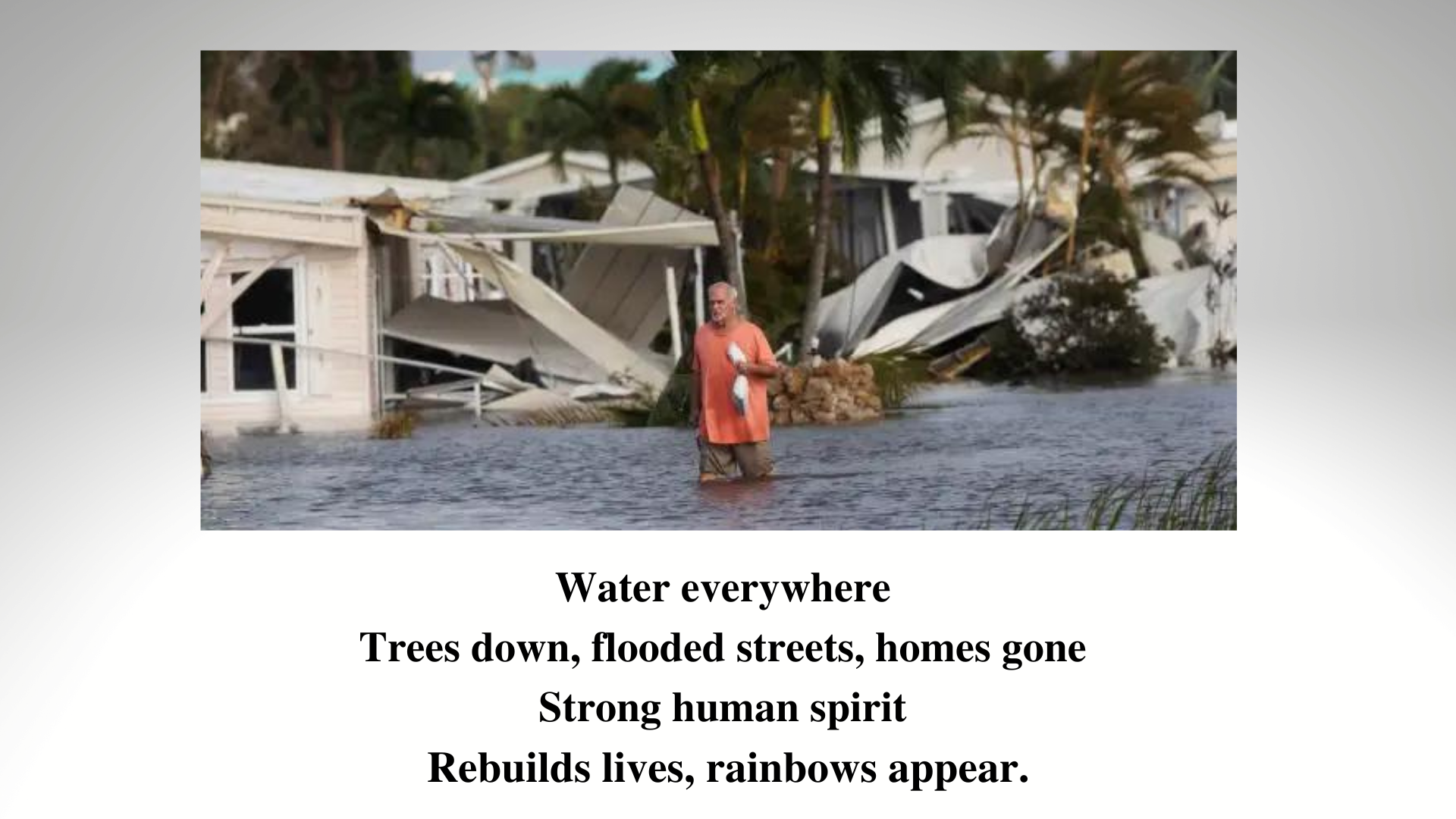
The recent storm, hurricane Ian, left devastation to many. Lost property, loss of lives, and large economic impact.

So many homes lost...where will the people go?
Dreams destroyed...how to rebuild them?
Transportation...how to safely travel by car?
Food, clothing, basic possessions lost...how to replace
Family photos and momentoes...irreplacable!

HOW CAN WE HELP?


Thank you for your help and your prayers.

WRAPPING UP SEPTEMBER

The last three days of September are a mixture of uncertainty and joy. Hurricane (Himicane) Ian is creating a large amount of uncertainty and it has yet to reach land here in Florida. The different models are now in agreement it will land in Florida, but exactly where is unknown.

Regardless of where “he” comes ashore, “he” is going to create havoc throughout most of the state. I think of the 3 pigs and the big bad wolf. The one pig had a house made of straw, the second one made of sticks, and the third pig’s house was made of bricks. Just as in real life, the wolf is portrayed as a hurricane that will blow down those homes that are not as sturdy. Flooding and storm surges are a threat to any house, and tornadoes that are within the hurricane can destroy even the “brick homes,” but less likely.

My joy in September is the beautiful support people have given as they have learned more about gynecologic cancers. On Monday I received a call from a friend whose cousin was just diagnosed with ovarian cancer. This lady is an RN and has worked in hospice for many years, but did not know about the symptoms of ovarian cancer. This is the very reason why I (and others) work so hard to get the message out.

My deepest thanks to each of you who read my blogs, donated to my “Teal Takeover” fundraiser, and forwarded the information to your friends and family members.

Let’s be like the pig who built a house made of bricks: he educated himself to know how best to protect himself. We need to do everything we can to protect ourselves from the storms of life and share our knowledge with others.

WOMEN SPEAK OUT

Meet 5 amazing women who share about thie journeys with one of the gynecologic cancers:

LYNN’S STORY: Uterine cancer survivor. Diagnosed at age 32. Symptoms: change in the menstrual cycle, fatigue, then profuse vaginal bleeding. She was diagnosed with clear cell carcinoma and had surgery and radiation. Her advice: I learned to write down all my questions in a notebook and take that with me—and to take someone else with me to hear it. Listen to your body—it does tell you things. Don’t pooh pooh something. It’s really just about listening to your body. It’s about knowing yourself.”

TIFFANY: Ovarian cancer diagnosis at age 32. Bloating and unexplained weight gain were the initial symptoms. The doctor ordered an x-ray and an upper endoscopy, followed by a CT scan one month later. A hysterectomy was performed followed by chemotherapy. Tiffany wants women to know that the PAP smear does not detect ovarian cancer. My advice to women would be listen to your bodies; don’t assume that it’s just nothing. Make sure that it’s just nothing. Remember you have to take care of yourself before you can take care of anyone else!

ANA R.: Cervical cancer diagnosis at age 36. Abnormal vaginal bleeding. For 8 years she had abnormal PAP smears and she was not told she had HPV. After some surgeries and chemotherapy, Ana is cancer free. I want women to know they need to take care of themselves. Don’t skip your annual exams, and if you feel something is amiss with your body, don’t worry about bothering doctors or upsetting them. This is your life! I also want people to know that my generation could potentially be the LAST generation to have cervical cancer. We can eradicate this disease by vaccinating our children, daughters AND sons. This is my mission now: to share my story so that others don’t have to go through what I went through.

TERESA: Vulvar cancer diagnosis age 40. Her symptom was a large and hard bump, which required two surgeries to completely remove the cancerous bump. It was caused by the HPV virus. Teresa stated Vulvar cancer might manifest in a way that causes shame, because you could conclude that you have an STD (sexually transmitted disease) and not want to get that embarrassing news. But I’d much rather be embarrassed and alive than modest and dead. Early detection is key. And if you have children who are preteens or teens, please get them vaccinated against HPV.

SARAH: at age 38 diagnosed with vaginal cancer. Her symptom was spotting after intercourse. She tested positive for HPV. Her treatment was radiation and chemotherapy. My message to other women is this: ask your doctor about Pap and HPV tests. Screenings are important to catch any problems early, when they are more treatable. Do not let fear, embarrassment, or shame prevent you from finding the help you need. You are not alone!

Thank you for reading these stories. For more stories go to https://www.cdc.gov/cancer/ovarian/stories/index.htm, https://www.cdc.gov/cancer/cervical/stories/index.htm, https://www.cdc.gov/cancer/vagvulv/stories/index.htm, https://www.cdc.gov/cancer/uterine/stories/lynn.htm

WE DON’T TALK ABOUT THIS AREA…

We don’t talk about the vulva…the forbidden area. Today’s discussion might make some of the readers uncomfortable, embarrassed, or giggly. However, it is an important area that is too often ignored.

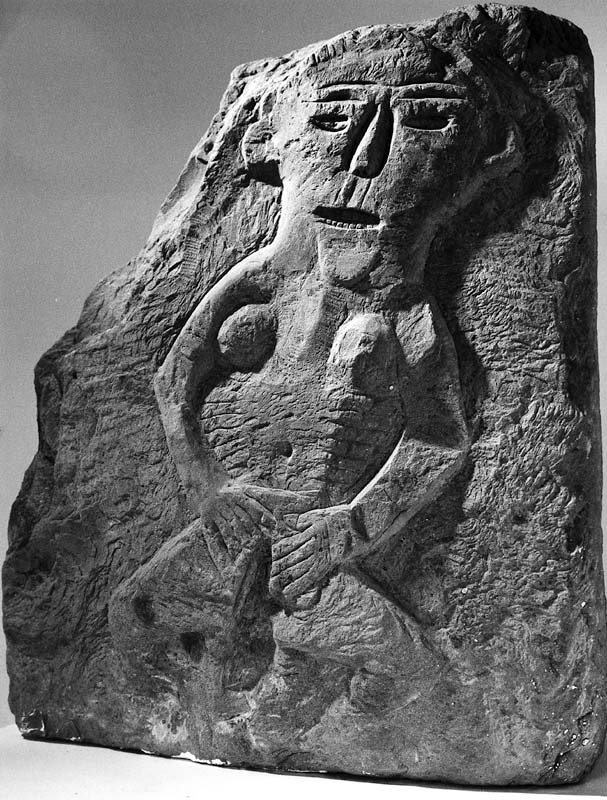
As far back as 3000 BC, statues show the male penis, but not the female labia. The same is true in ancient Greek and Roman times.

What is it? Where is it?

  • The vulva is the outer part of the female genitalia
  • Part of the female reproductive system
  • It includes the labia majora, labia minora, and the clitoris.

Cancer of the Vulva

  • Most of them are squamous cell carcinomas, which is more commonly seen in older women.
  • Adenocarcinomas most often start in the cells of the Bartholin glands, which are at the opening of the vagina.
  • Other cancer types found in the vulvar region are melanoma, sarcoma, and basal cell carcinoma.

The message is: do not ignore this important area of the body.

  • Once a month, take a mirror and check the skin for any redness, swelling, or rashes.
  • Avoid HPV infection
  • Condom use reduces the risk of HPV and other sexually transmitted diseases.
  • Get the HPV vaccine.
  • Do not smoke.
  • Get regular pelvic exams

The female body was designed as a source of pleasure, fertility, movement, strength, and well-being. (Christine Northrup)

REPRODUCTIVE SYSTEM: INTERESTING FACTS

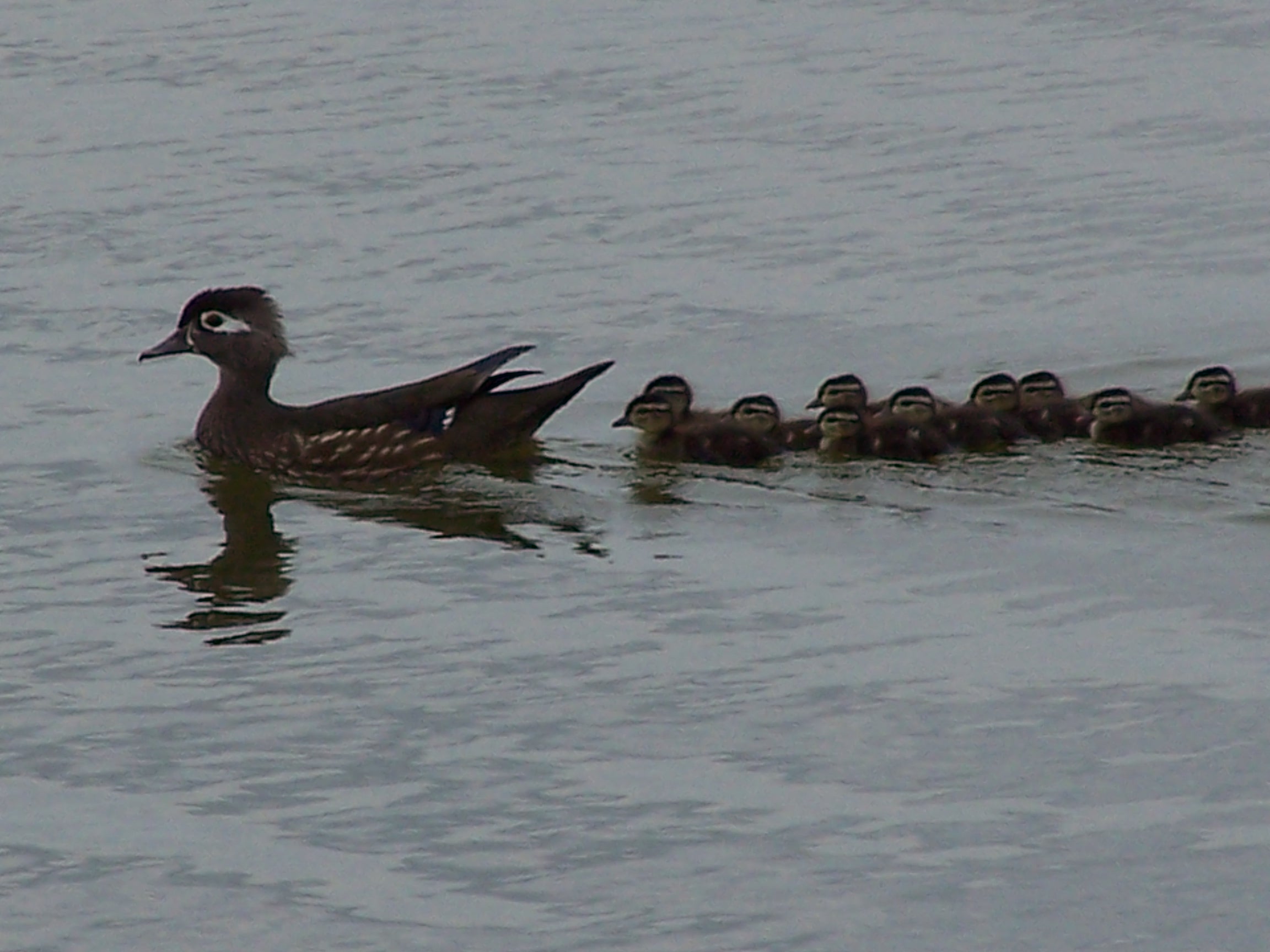
On my walk yesterday morning, I watched the mother Wood duck lead her newborn chicks across the water. The beautiful male was nearby. Watching them inspired me to jot down a few interesting bits of information.

IN THE HUMAN, DID YOU KNOW?

  • There are about 100-200 million sperm in each ejaculation
  • At birth, there are about 1-2 million eggs.
  • At puberty, there are about 300,000 eggs
  • Fertilization normally occurs in the fallopian tubes
  • Eggs travel from the ovary through the fallopian tubes to the uterus.
  • Fallopian tubes are about 12 cm long and as wide as a threading needle.
  • The male sperm is the smallest human cell; the female egg is the largest human cell.

INSECTS: Most reproduce by laying eggs. The eggs are produced by the female in a pair of ovaries. Sperm, produced by the male in one testis or more is transmitted to the female during mating by means of external genitalia. https://en.wikipedia.org/wiki/Insect_reproductive_system

Carl Linnaeus in 1771 used the scientific symbols of Mars and Venue to denote the male and female reproductive systems.

GYNECOLOGY-ONCOLOGY

  • In January 1968, Hervy E. Averette, MD, and John J. Mikuta, MD, identified a need for the creation of a medical society focused solely on gynecologic oncology.
  • As of 2019, there were 1,157 gyn. oncologists in the U.S.
  • There are 113,000 new cases in 2021.
  • Rural areas have limited access to these specialists.
  • Education: 4 years of college, 4 years of medical school, 4 years of residency, and then 3 years of gynecology oncology.

The daffodil symbolizes a new birth. Always have a bouquet of yellow daffodils…one flower means misfortune. Yellow symbolizes joy.

Information gives us power, appreciation, and understanding. The human body’s beauty, capabilities, complexity, and simplicity are fascinating. Each of us has a responsibility to take care of, nurture, and cherish our bodies. As Maya Angelou stated:

EVEN THE FAMOUS ARE NOT IMMUNE

A person’s fame or fortune does not protect them from getting a serious illness…even cancer. They are humans just like us.

Some celebrities who were diagnosed with one of the gynecologic cancers:

  • Fran Drescher…uterine cancer
  • Kathy Bate…breast and ovarian cancers
  • Judith Blume…cervical cancer
  • Pam Grier…cervical cancer
  • Camille Grammer…endometrial cancer
  • Shannon Miller…ovarian cancer

Most recently, tennis star Chris Everett was diagnosed with ovarian cancer. Her older sister, Jeanne, passed away from ovarian cancer at the age of 62. By the time she was diagnosed, the cancer was at a late stage.

Like her sister, Chris has a pathological variant of the BRCA1 gene.

For Chris, the cancer was discovered after a hysterectomy, which was done as a preventive measure. However, 10 days later a second surgery was performed to remove some lymph nodes and surrounding tissue. The pathology report showed malignant cells. She was staged at 1C.

Her advice is imperative: “Be your own advocate. Know your family’s history. Have total awareness of your body, follow your gut and be aware of changes. Don’t try to be a crusader and think this will pass.

This article is courtesy of https://www.espn.com/tennis/story/_/id/33058250/tennis-star-chris-evert-diagnosed-stage-1c-ovarian-cancer